




![]() Two speed special 26"/28", England, 1995/96
Two speed special 26"/28", England, 1995/96

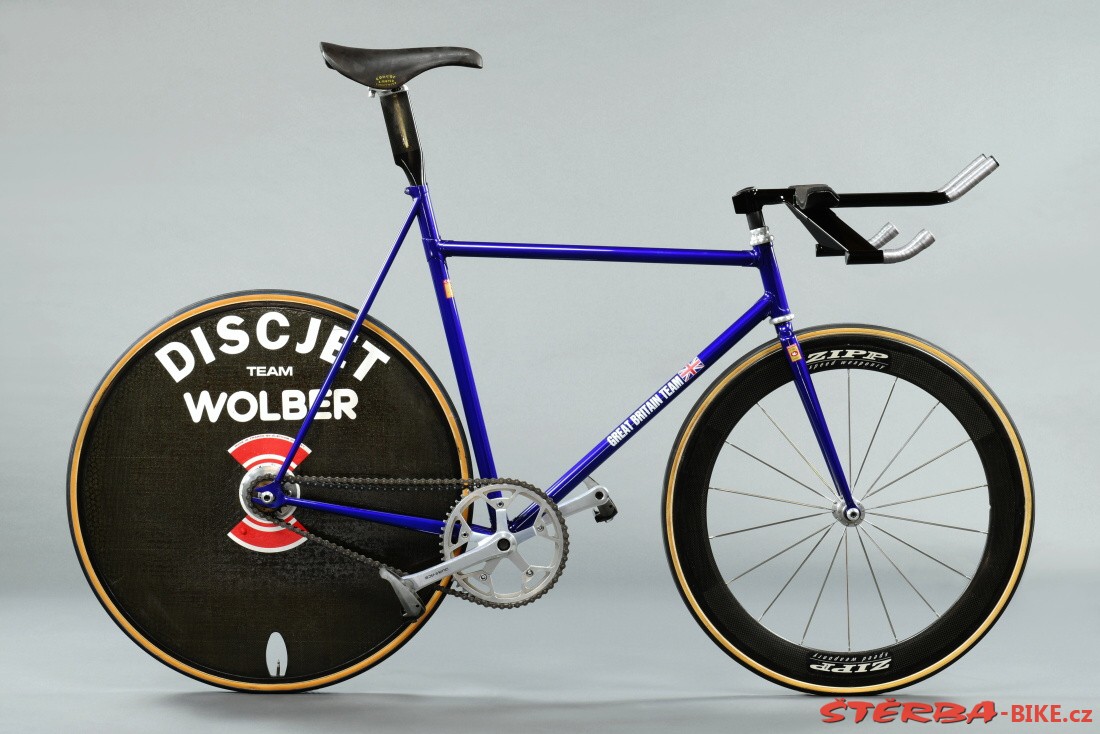
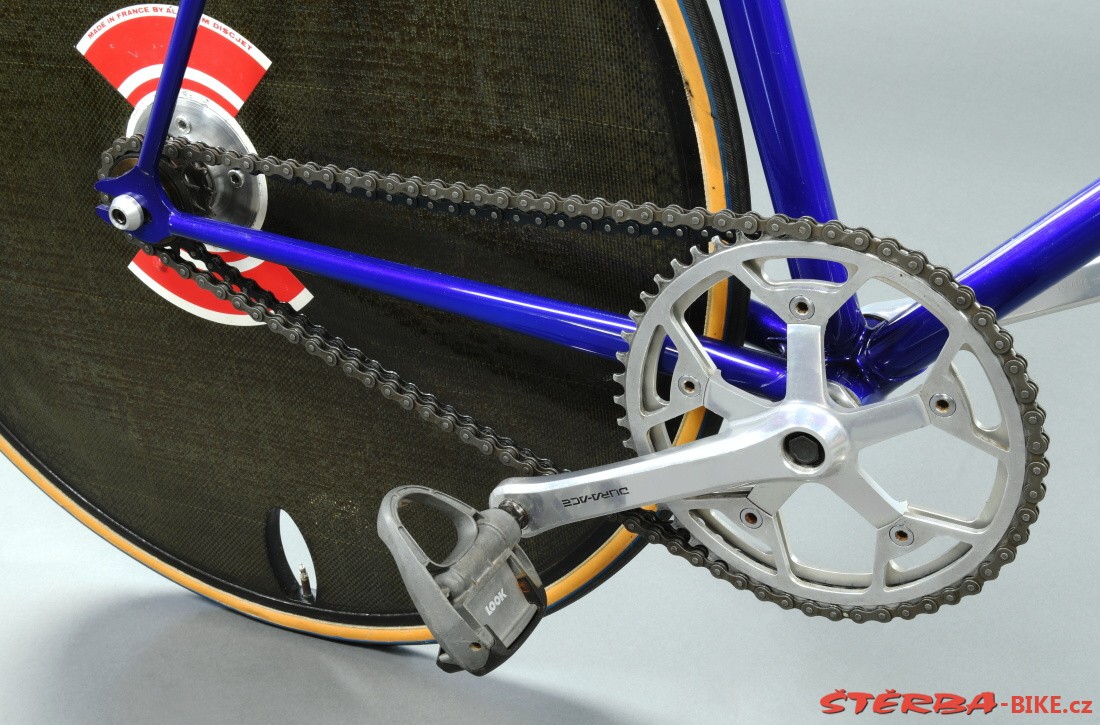
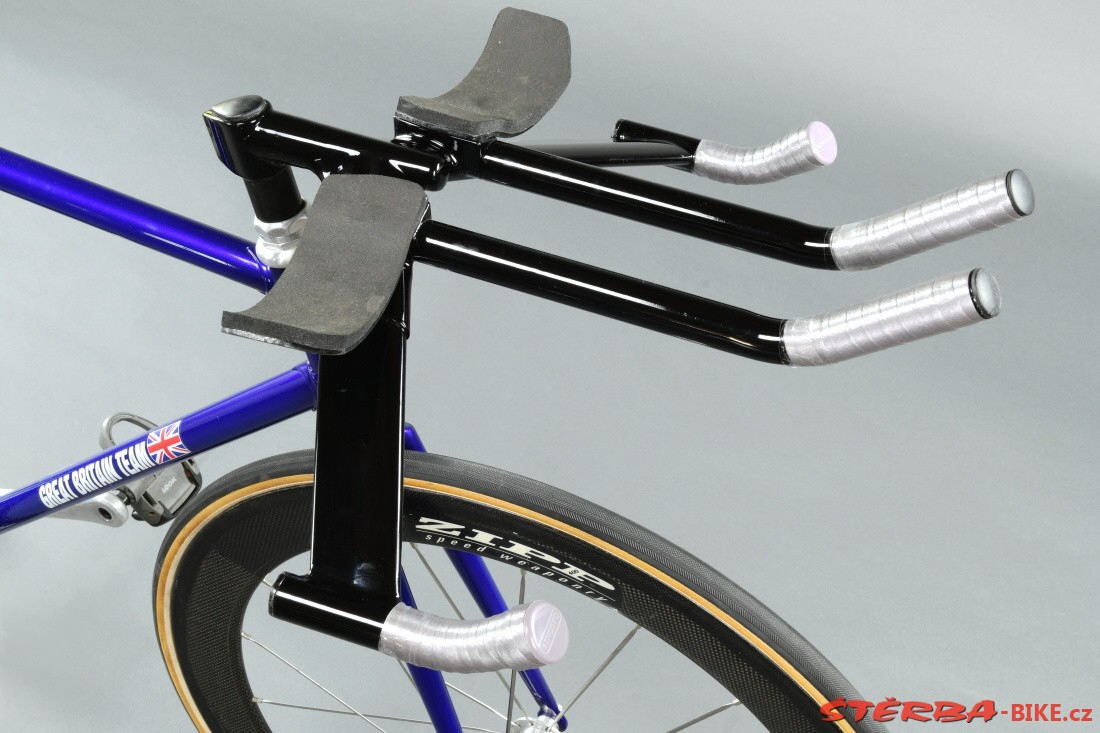
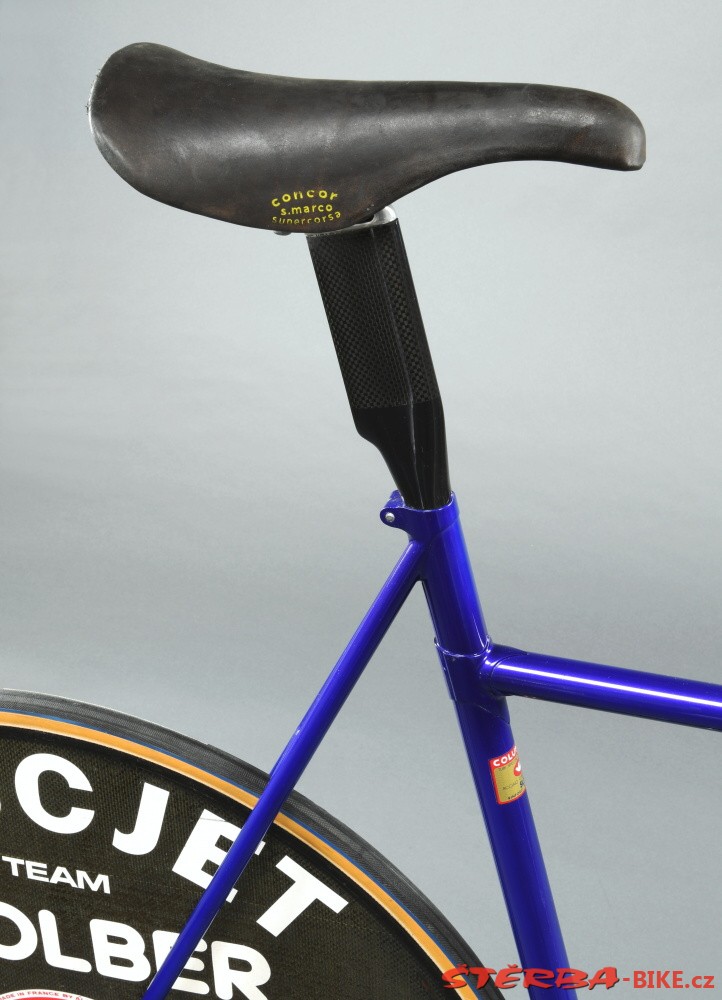
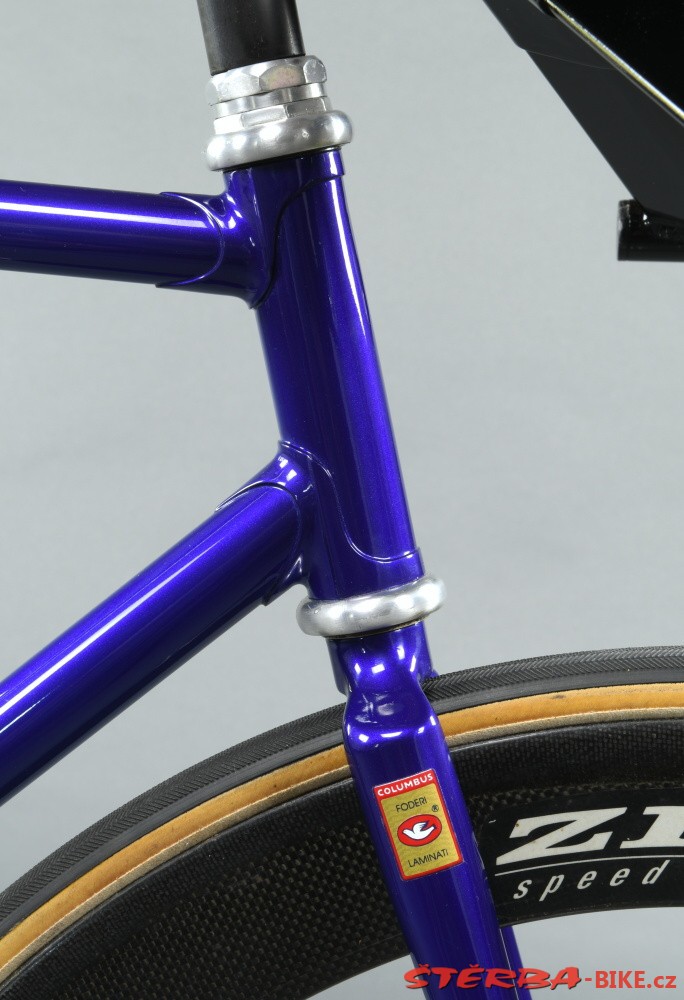
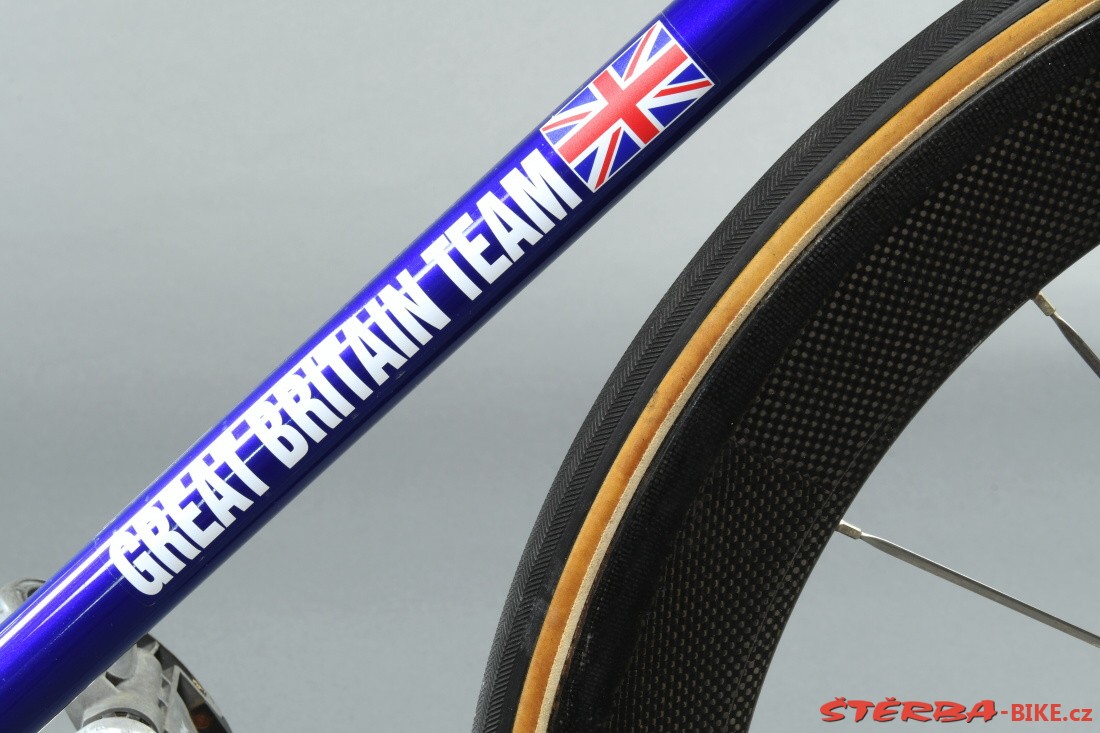
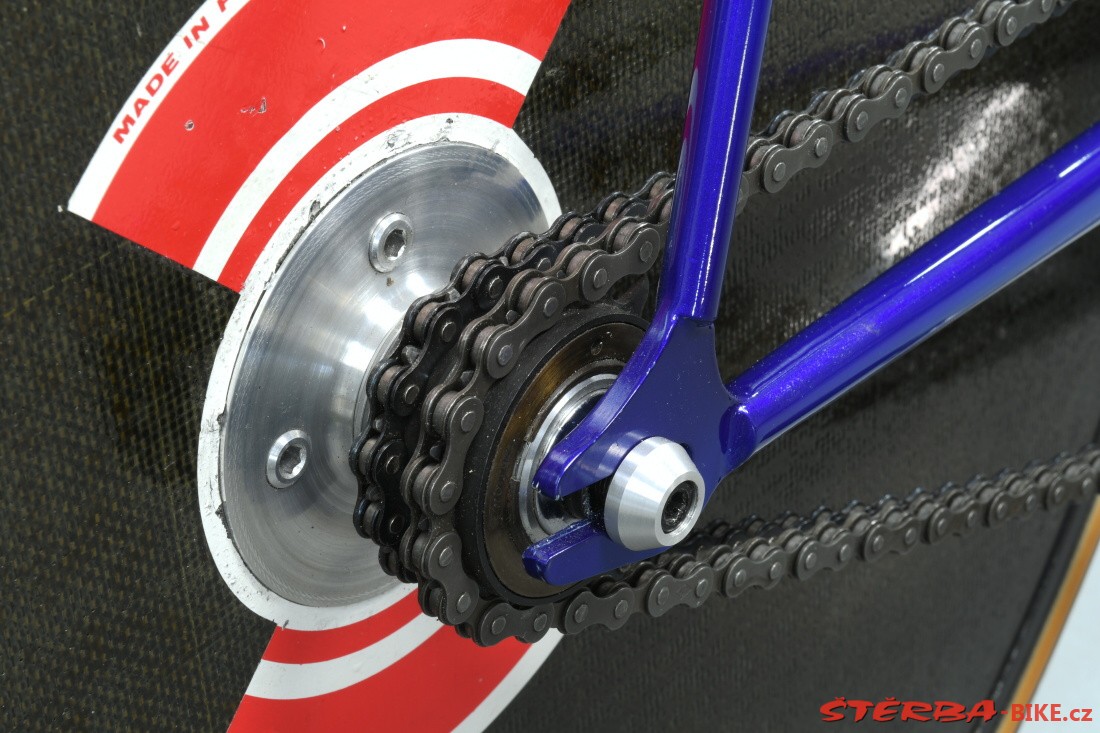
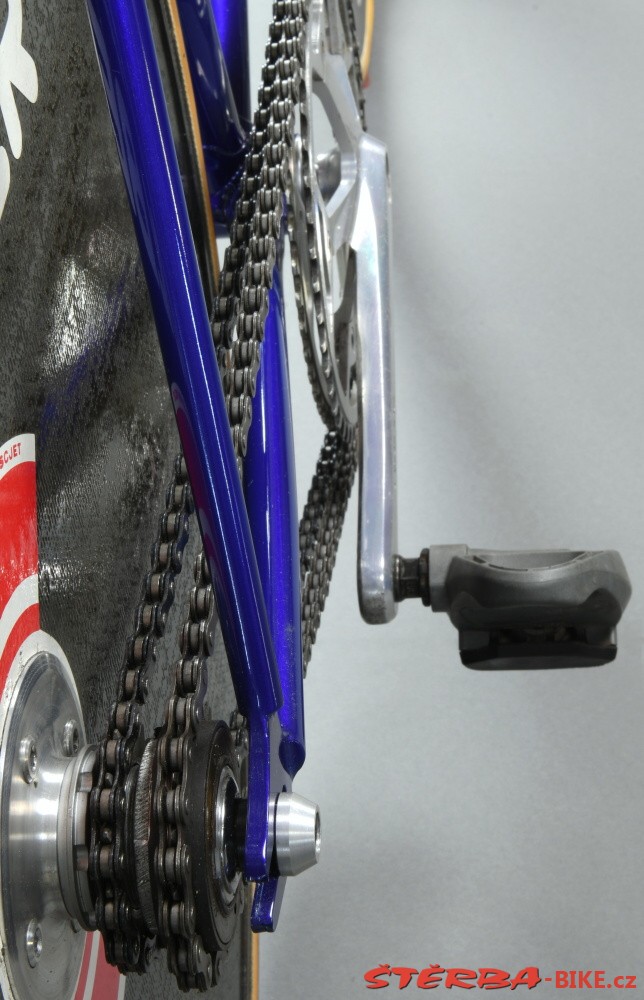
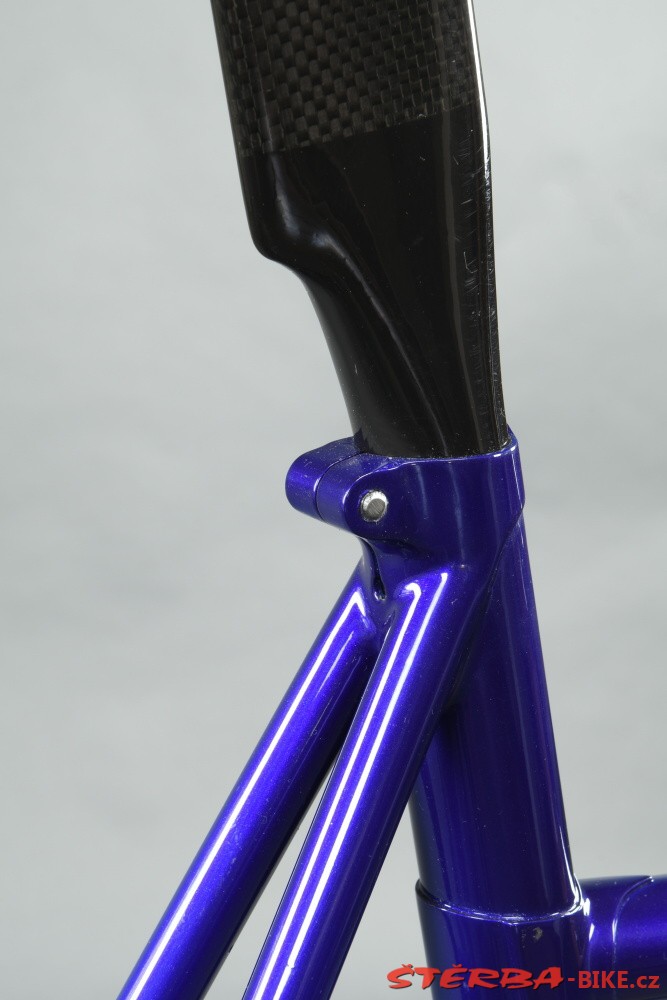
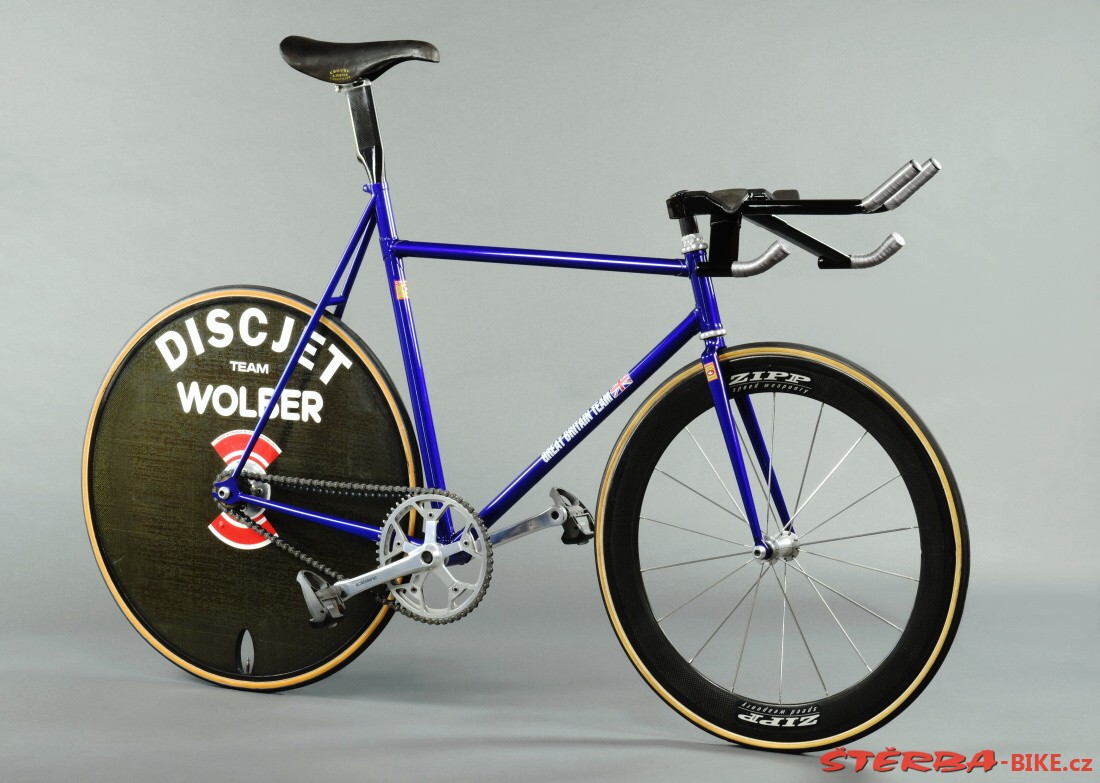
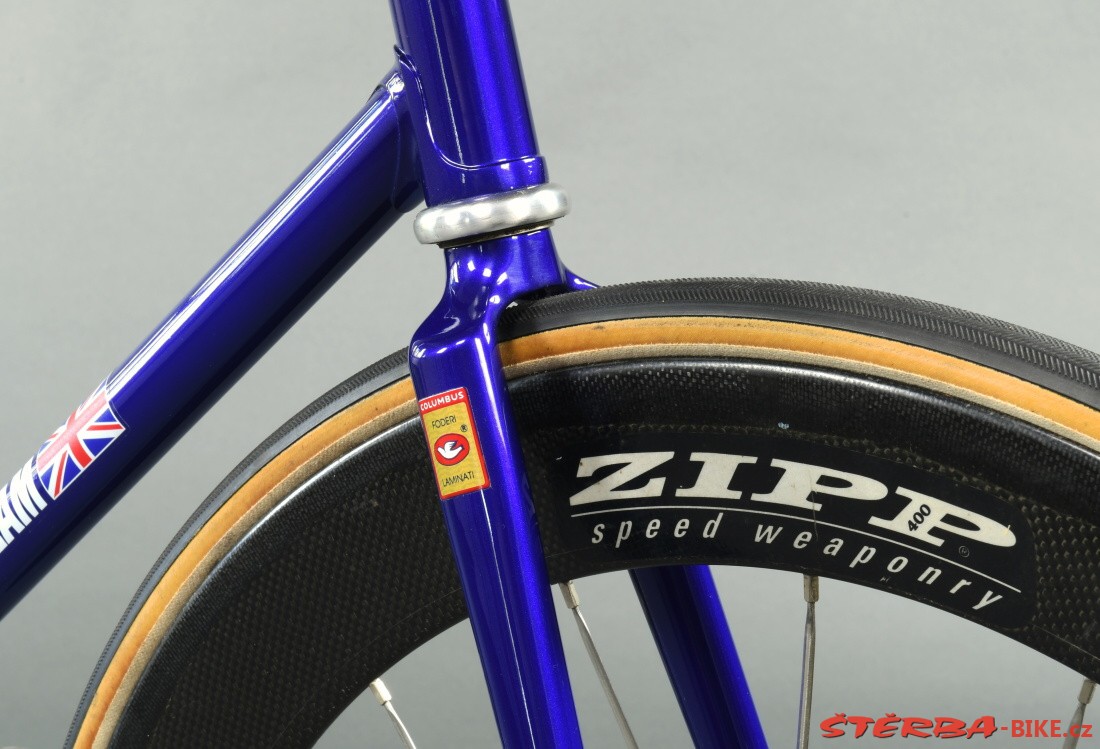
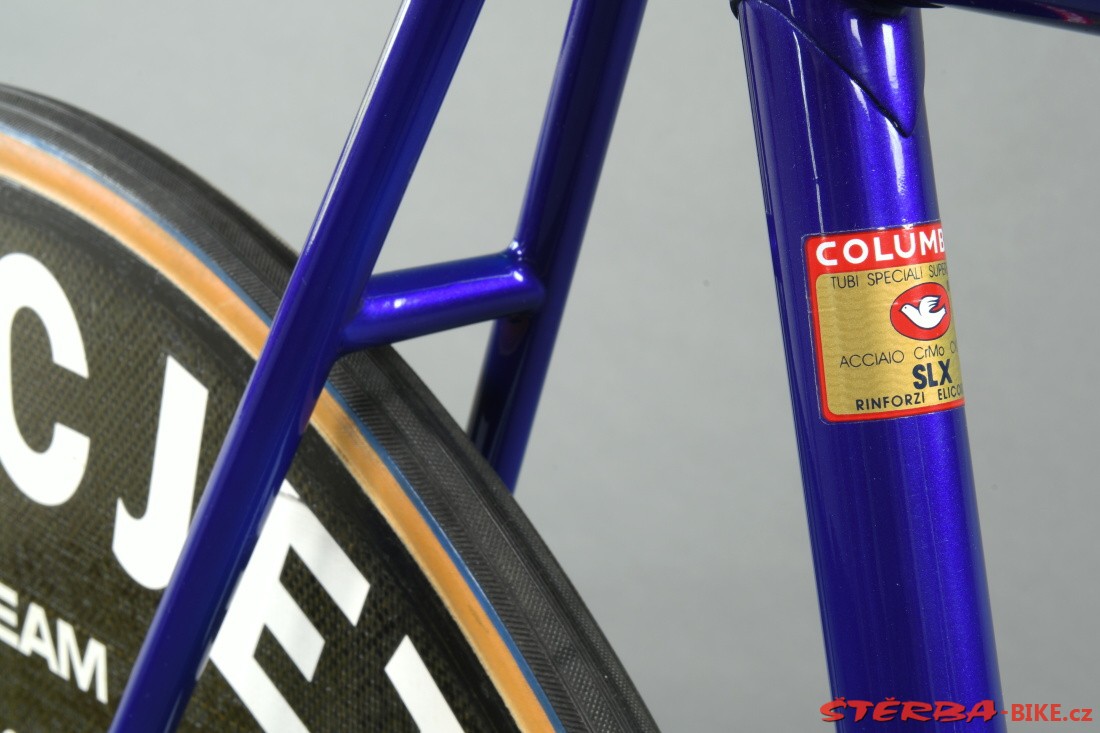
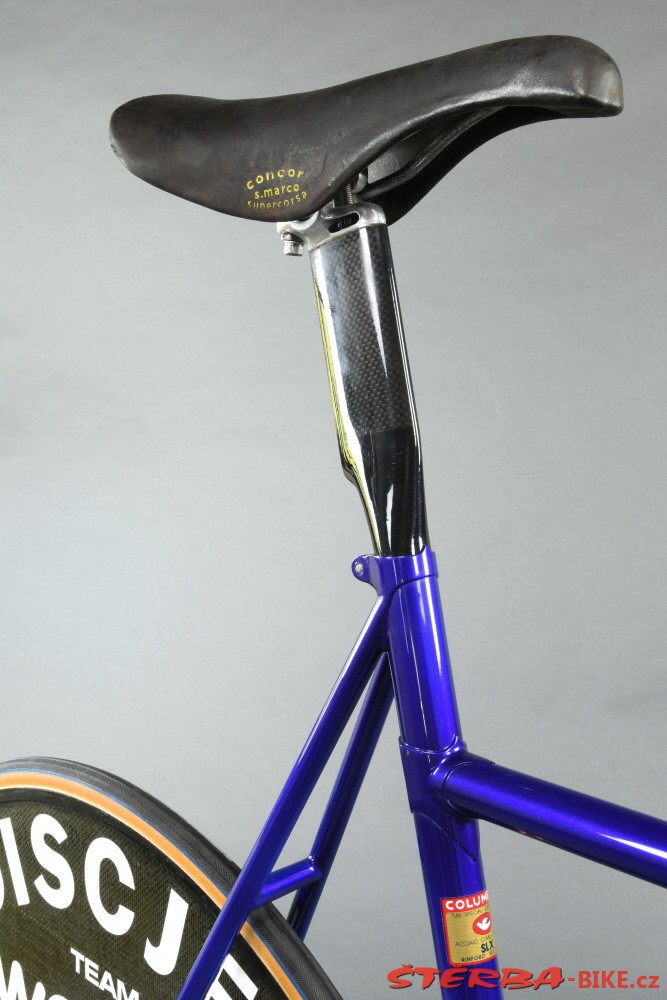
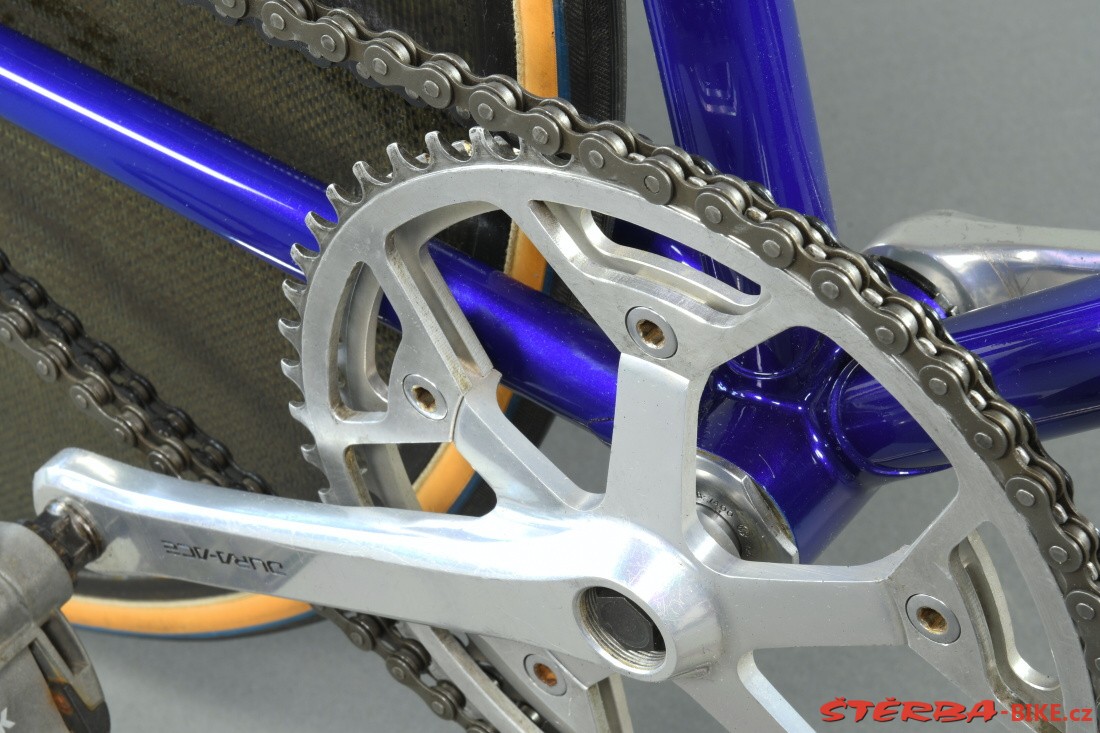
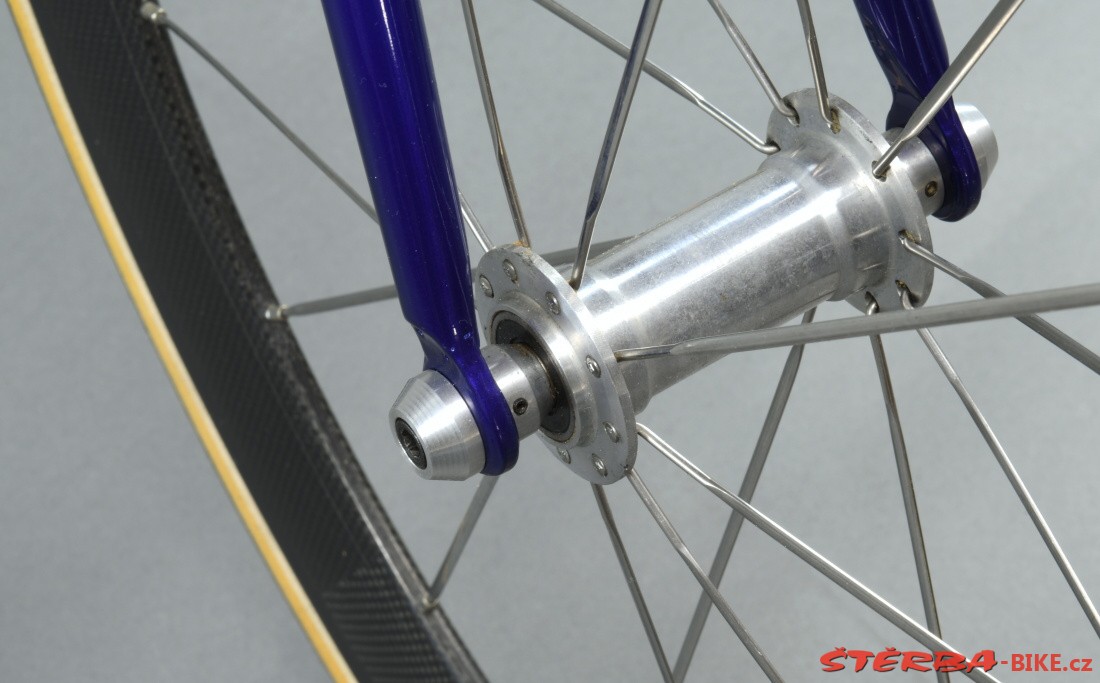
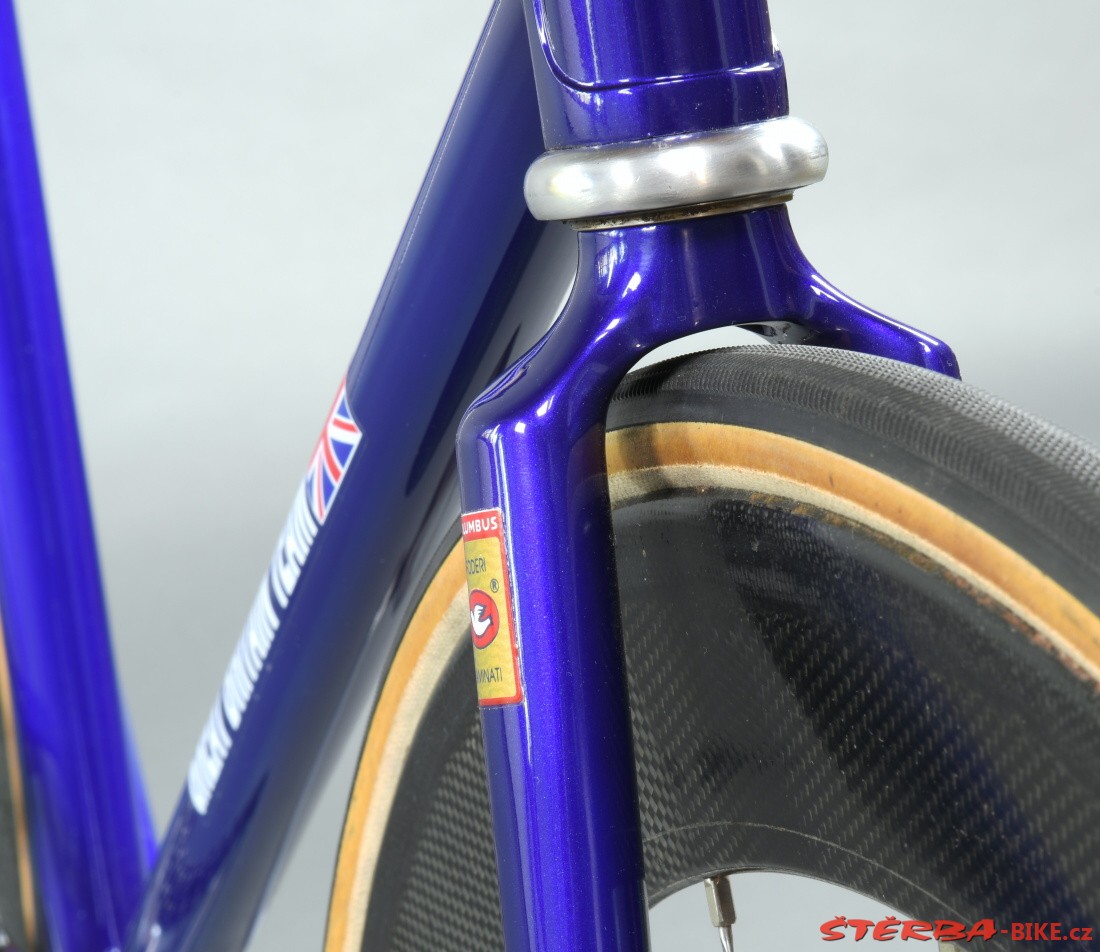
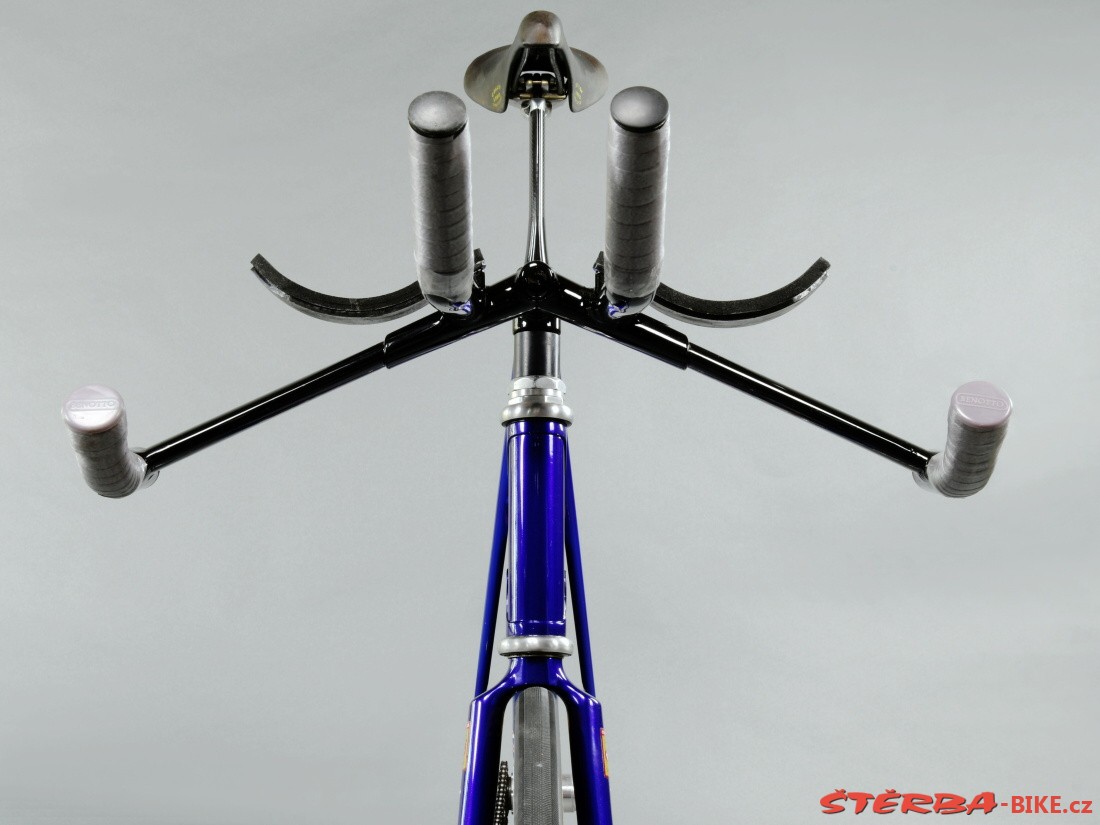
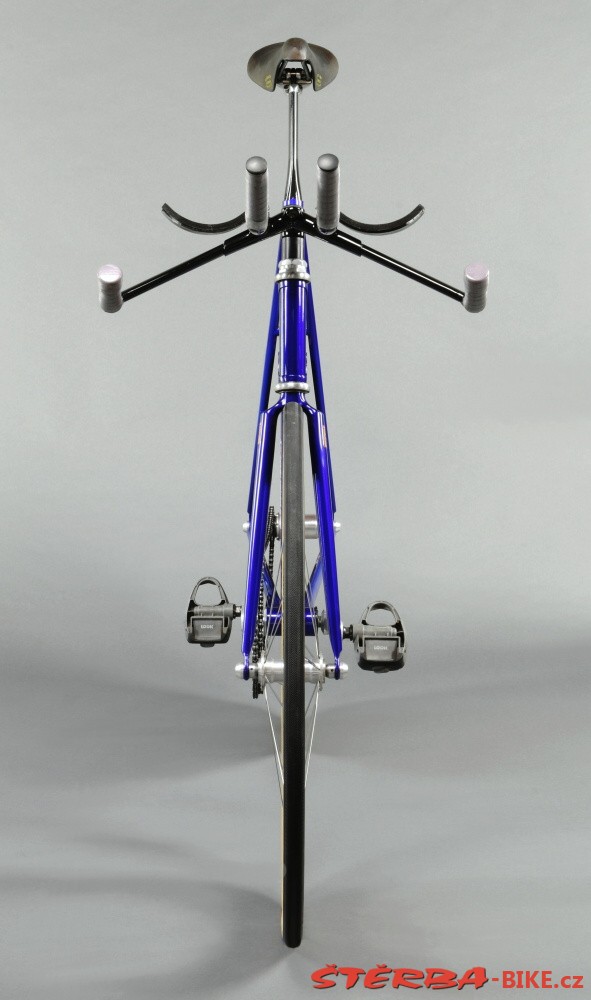
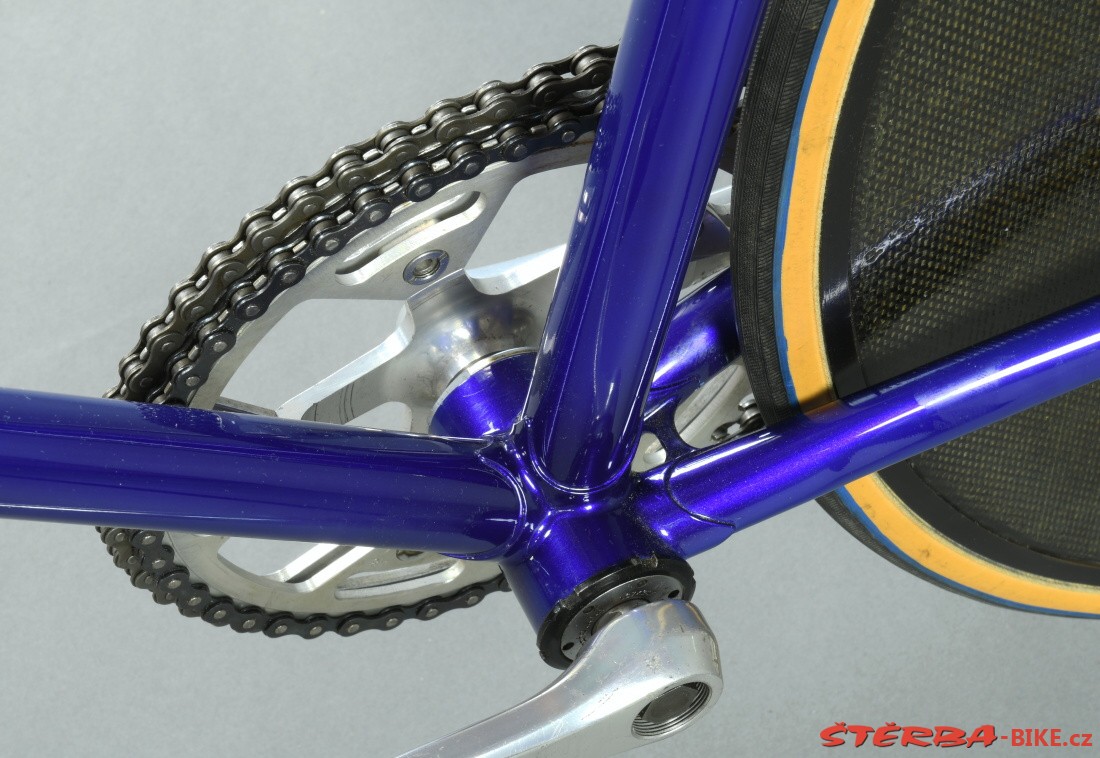
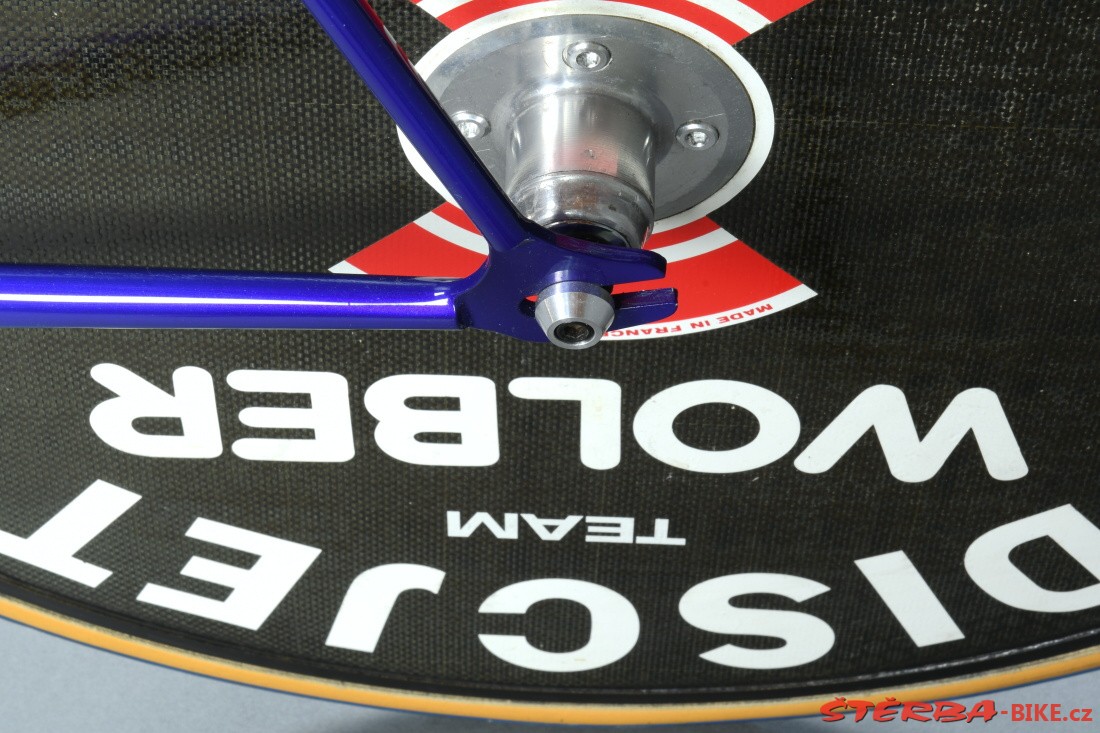
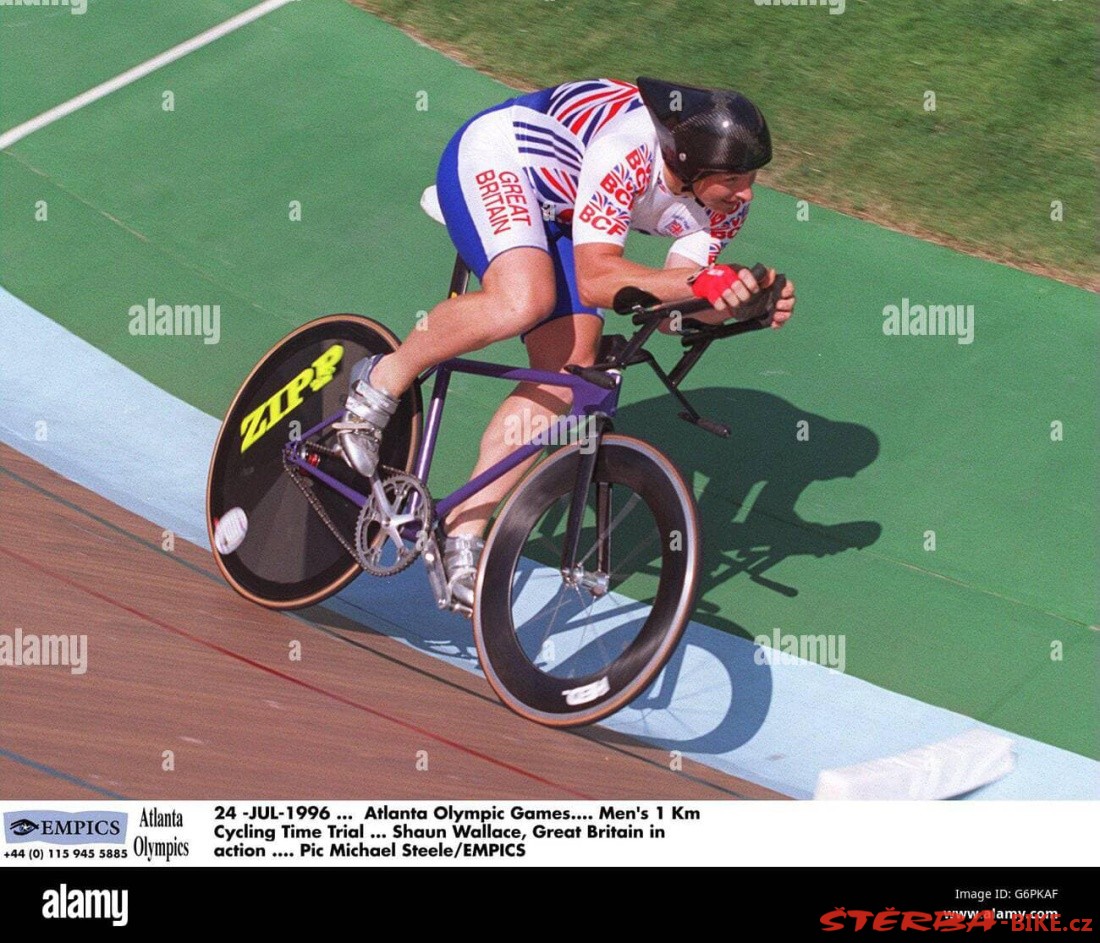
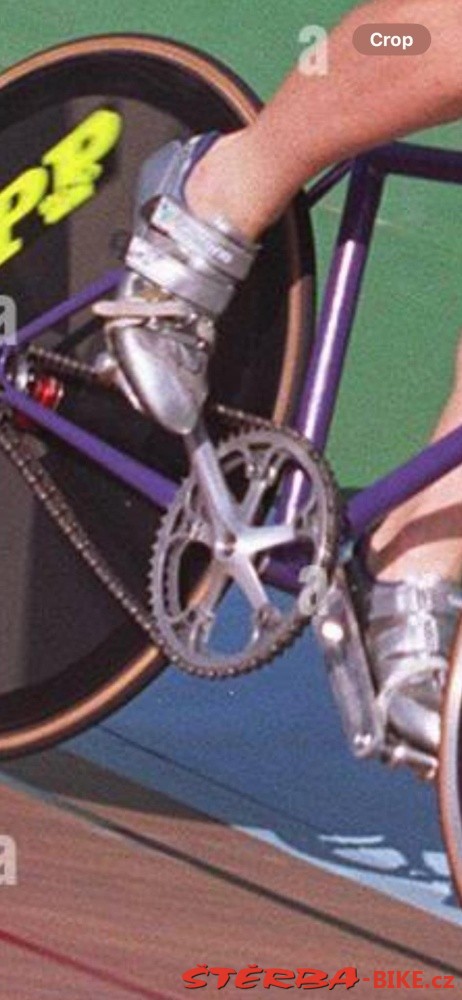
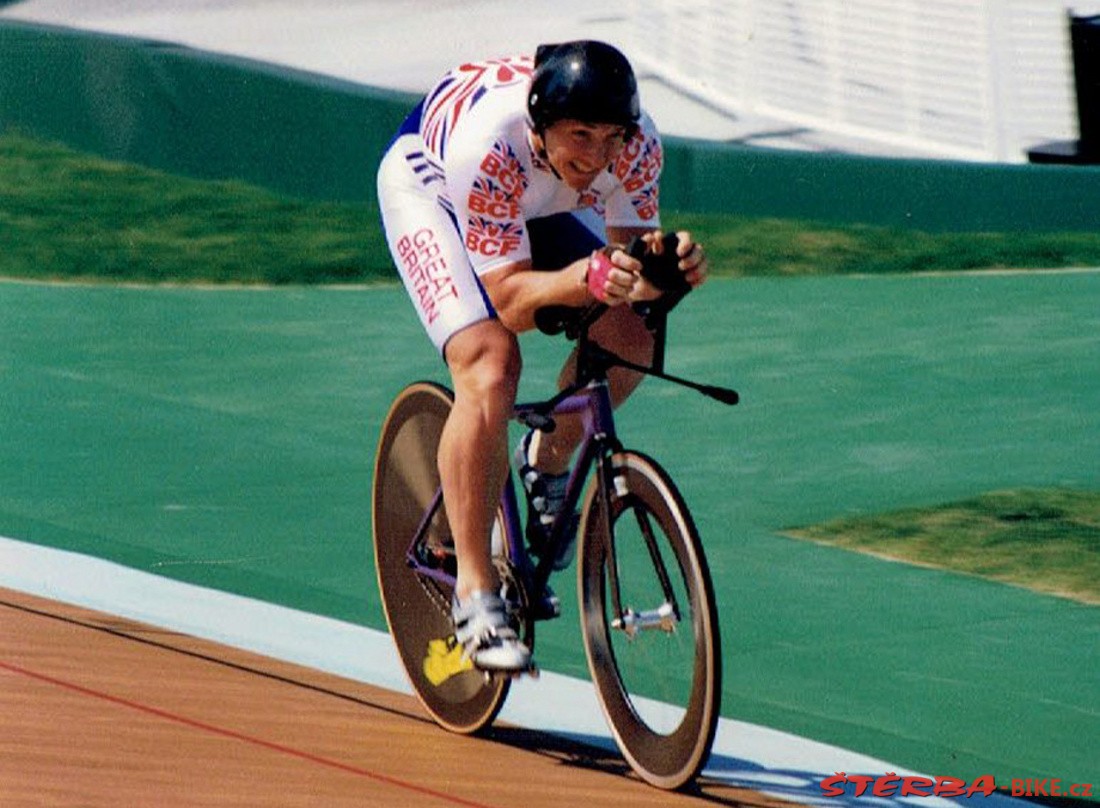
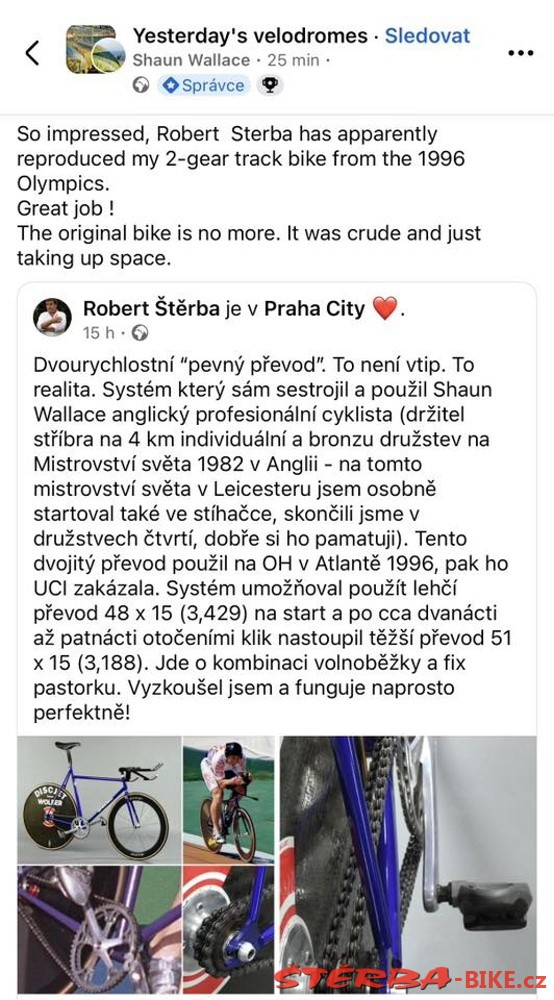
Two-speed "fixed gear". A system that was built and used by Shaun Wallace, an English professional cyclist (holder of silver in the 4 km individual and bronze in the 4 km team at the 1982 World Championships in England - at this World Championships in Leicester I also personally started in the pursuit, we finished in the team quarter, I remember it well). He used this double gear at the 1996 Olympic Games in Atlanta, then the UCI banned it. The system allowed using a lighter gear 48 x 15 (3.429) at the start and after about twelve to fifteen crank turns the heavier gear 51 x 15 (3.188) started. It is a combination of a freewheel and a fixed pinion. I tried it and it works absolutely perfectly!
It is a terribly wild but great idea to make a two-speed fixed gear. It requires a special hub with a long thread for the pinion. At the end of the thread there is a fixed pinion with a freewheel. You start on that. A classic fixed sprocket with a heavier gear is loose, for example, halfway through the thread on the disc. It engages and the bike drives the freewheeling sprocket. The cranks and the second chain slowly tighten the sprocket. It is rotated onto the hub according to the selected gear. When it reaches the end of the thread, it tightens and starts to engage. This drives the bike to a heavier gear and the freewheeling sprocket starts to spin idle. Simple and perfect!
Shaun Wallace:
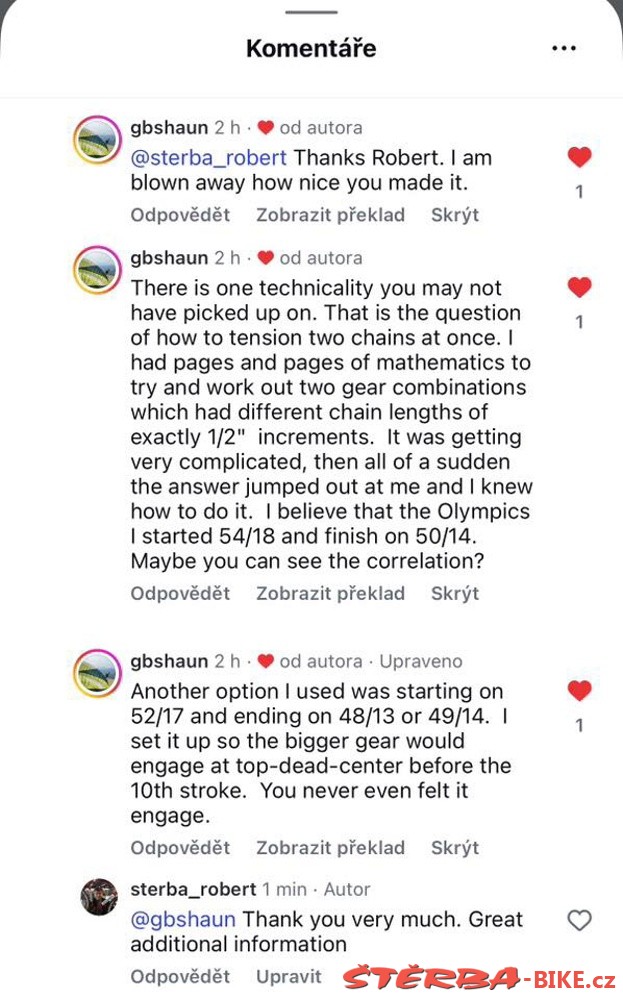
“The final drive cog "floated" between the freewheel on the outside and the normal shoulder on the inside.
Essentially I'd start off on the ~3:1 gearing but the fixed cog was ~3.7:1 so would screw itself on at the rate of 0.7 revolutions per pedal revolution. After a known number of pedal revs the cog would tighten onto the shoulder and take over.
I managed to get it so it would engage with the cranks at 12&6 o'clock so you'd not even feel it take over. I just knew on the 11th stroke the gear would be bigger.”